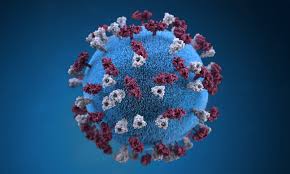
The way in which the body responds to a vaccine depends on the type of vaccine being administered. There are several different types of vaccine available and with new technology there will be further additions.
Classification of vaccinesThere are two basic types of vaccines: live attenuated and inactivated. The characteristics of live and inactivated vaccines are different, and these characteristics determine how the vaccine is used. - Live attenuated vaccines are produced by modifying a disease-producing (“wild”) virus or bacteria in a laboratory. The resulting vaccine organism retains the ability to replicate (grow) and produce immunity, but usually does not cause illness. Live attenuated vaccines include live viruses and live bacteria.
- Inactivated vaccines can be composed of either whole viruses or bacteria, or fractions of either.
- Fractional vaccines are either protein-based or polysaccharide-based.
- Protein-based vaccines include toxoids (inactivated bacterial toxin), and subunit or subvirion products.
- Most polysaccharide-based vaccines are composed of pure cell-wall polysaccharide from bacteria.
- Conjugate polysaccharide vaccines are those in which the polysaccharide is chemically linked to a protein. This linkage makes the polysaccharide a more potent vaccine.
General Rule The more similar a vaccine is to the natural disease, the better the immune response to the vaccine.
Live attenuated vaccines- Live vaccines are derived from “wild,” or disease-causing, virus or bacteria.
- These wild viruses or bacteria are attenuated, or weakened, in a laboratory, usually by repeated culturing. For example, the measles vaccine used today was isolated from a child with measles disease in 1954. Almost 10 years of serial passage on tissue culture media was required to transform the wild virus into vaccine virus.
- In order to produce an immune response, live attenuated vaccines must replicate (grow) in the vaccinated person.
- A relatively small dose of virus or bacteria is given, which replicates in the body and creates enough virus/bacteria to stimulate an immune response.
- Anything that either damages the live organism in the vial (e.g., heat, light), or interferes with replication of the organism in the body (circulating antibody) can cause the vaccine to be ineffective.
- Although live attenuated vaccines replicate, they usually do not cause disease, such as may occur with the natural (“wild”) organism. When a live attenuated vaccine does cause “disease,” it is usually much milder than the natural disease, and is referred to as an adverse reaction.
- The immune response to a live attenuated vaccine is virtually identical to that produced by a natural infection. The immune system does not differentiate between an infection with a weakened vaccine virus and an infection with a wild virus.
- Live attenuated vaccines are generally effective with one dose, except those administered orally. Live attenuated vaccines may cause severe or fatal reactions as a result of uncontrolled replication (growth) of the vaccine virus. This only occurs in persons with immunodeficiency (e.g., from leukemia, treatment with certain drugs, or HIV infection).
- A live attenuated vaccine virus could theoretically revert back to its original pathogenic (disease-causing) form. This is known to happen only with live (oral) polio vaccine.
- Active immunity from a live attenuated vaccine may not develop due to interference from circulating antibody to the vaccine virus. Antibody from any source (e.g., transplacental, transfusion) can interfere with growth of the vaccine organism and lead to a poor response or no response to the vaccine (also known as vaccine failure). Measles vaccine virus seems to be most sensitive to circulating antibody. Polio and rotavirus vaccine viruses are least affected.
- Live attenuated vaccines are labile, and can be damaged or destroyed by heat and light. They must be handled and stored carefully.
- Currently available live attenuated viral vaccines include measles, mumps, rubella, varicella, yellow fever, influenza (intranasal) and Oral polio vaccine. Live attenuated bacterial vaccines include BCG and oral typhoid vaccine.
Inactivated vaccines- These vaccines are produced by growing the bacteria or virus in culture media, then inactivating it with heat and/or chemicals (usually formalin).
- In the case of fractional vaccines, the organism is further treated to purify only those components to be included in the vaccine (e.g., the polysaccharide capsule of pneumococcus).
- Inactivated vaccines are not alive and cannot replicate. The entire dose of antigen is administered in the injection. These vaccines cannot cause disease from infection, even in an immunodeficient person.
- Unlike live antigens, inactivated antigens are usually not affected by circulating antibody. Inactivated vaccines may be given when antibody is present in the blood (e.g., in infancy, or following receipt of antibody-containing blood products).
- Inactivated vaccines always require multiple doses. In general, the first dose does not produce protective immunity, but only “primes” the immune system. A protective immune response develops after the second or third dose.
- In contrast to live vaccines, in which the immune response closely resembles natural infection, the immune response to an inactivated vaccine is mostly humoral, little or no cellular immunity results.
- Antibody titers against inactivated antigens diminish with time. As a result, some inactivated vaccines may require periodic supplemental doses to increase, or “boost,” antibody titers.
- Currently available inactivated vaccines are limited to inactivated whole viral vaccines (influenza, polio, rabies, and hepatitis A). Whole inactivated bacterial vaccines inlcude pertussis, typhoid, cholera, and plague. “Fractional” vaccines include subunits (hepatitis B, influenza, acellular pertussis), and toxoids (diphtheria, tetanus).
Polysaccharide vaccines- Polysaccharide vaccines are a unique type of inactivated subunit vaccine composed of long chains of sugar molecules that make up the surface capsule of certain bacteria. Pure polysaccharide vaccines available include: pneumococcal, meningococcal, and Salmonella typhi.
- The immune response to a pure polysaccharide vaccine is typically T-cell independent, which means that these vaccines are able to stimulate B-cells without the assistance of T-helper cells.
- T-cell independent antigens, including polysaccharide vaccines, are not consistently immunogenic in children <2 years of age. Young children do not respond consistently to polysaccharide antigens, probably because of immaturity of the immune system.
- Repeated doses of most inactivated protein vaccines cause the antibody titer to go progressively higher, or “boost.” Repeat doses of polysaccharide vaccines do not cause a booster response. This is not seen with polysaccharide antigens.
- Antibody induced with polysaccharide vaccines has less functional activity than that induced by protein antigens. This is because the predominant antibody produced in response to most polysaccharide vaccines is IgM, and little IgG is produced.
Conjugate vaccines- In the late 1980s, it was discovered that the problems with polysaccharide vaccines could be overcome through a process called conjugation.
- Conjugation changes the immune response from T-cell independent to T-cell dependent, leading to increased immunogenicity in infants and antibody booster response to multiple doses of vaccine.
- The first conjugated polysaccharide vaccine was for Haemophilus influenzae type b (Hib).
- Also now available include conjugate vaccines for pneumococcal disease and meningococcal disease.
Recombinant vaccines- Vaccine antigens may also be produced by genetic engineering technology.
- These products are sometimes referred to as recombinant vaccines.
- Three genetically-engineered vaccines are currently available.
- Hepatitis B vaccines are produced by insertion of a segment of the hepatitis B virus gene into the gene of a yeast cell. The modified yeast cell produces pure hepatitis B surface antigen when it grows.
- Live typhoid vaccine (Ty21a) is Salmonella typhi bacteria that has been genetically modified to not cause illness.
- Live attenuated influenza vaccine (LAIV) has been engineered to replicate effectively in the mucosa of the nasopharynx but not in the lungs.
|